Why is it so hard to eat healthy when you’re short on time (and why it’s not your fault)
If you have a life full of commitments, you’ve probably already thought:
“I want to eat better… but I just don’t have time.”
Between work, meetings, commuting, deadlines and responsibilities, health often becomes something to postpone. Not because it's not important, but because it seems to require more time than you have available.
And that’s where the problem starts.
Most nutrition advice seems designed for people who have free hours every day: preparing elaborate meals, counting calories, following rigid diet plans, doing complicated meal prep, or cooking every night. But if you work 8-10 hours a day (or more), this approach is simply not realistic.
The result?
It's not a lack of motivation.
It's not a lack of discipline.
It's a lack of strategies suited to a busy life.
Many professionals end up in one of these patterns:
- skipping meals and getting to evening with no energy
- eating whatever is handy because you’re short on time
- relying too much on coffee and quick snacks
- starting diets that only last a few weeks
The real issue is that we often try to fit health into an already full life instead of finding a way to make it work together with your routine.
What if the approach were different?
What if the secret isn’t finding more time, but using better the time you already have?
The good news is that eating healthy when you’re short on time doesn’t require perfection or extreme diets. It only needs simple, practical, and sustainable strategies, designed for real‑world people who don’t have hours to devote to nutrition.
In the next sections we’ll show how you can start eating better, gain more energy, and improve your health without making things complicated, even if your days are already packed.
What does eating healthy really mean?
When we talk about healthy eating, we often think of complicated rules: cutting out whole food groups, following perfect diets, weighing everything, or cooking elaborate dishes. For someone with a busy life, that view isn’t just stressful—it’s unsustainable.
The truth is that eating healthy doesn’t mean eating perfectly.
It means instead making choices that support your energy, your focus, and your metabolic health, even when time is limited.
If we simplify the idea, healthy eating for someone with little time should meet three basic criteria, it must be:
- Easy to follow, without demanding too much mental or organizational time.
- Long‑term sustainable, not something you can only do when life is perfectly organized.
- Effective, meaning it truly helps you feel better, not just follow theoretical rules.
In practice, for a busy professional, eating healthy often means things far more concrete than you might think:
- choose foods that give you steady energy instead of spikes and crashes,
- prefer minimally processed foods when possible,
- build simple meals instead of perfect ones,
- have strategies for chaotic days instead of relying on willpower alone.
Another common mistake is thinking that healthy eating always takes more time.
In reality, the opposite often happens: when you learn to choose food better, you save time, mental energy, and unnecessary decisions.
This is especially important for people who work a lot. Every decision you make during the day drains attention. If food also becomes complicated, you end up picking the easiest short‑term solution, not the best long‑term one.
That’s why the smartest approach isn’t chasing the perfect diet, but building a simple, automatic food system that works even in the busiest weeks.
In the next section we’ll look at exactly what stops most busy people from eating healthy, and the most common mistakes that sabotage energy, metabolism, and focus without them even noticing.
The 5 most common mistakes people make when trying to eat healthy with little time
Many professionals genuinely try to improve their diet, but often see few results not because they lack effort, but because they follow strategies that don’t fit their daily reality.
In other words, the problem isn’t what to eat.
The problem is how to make nutrition fit a life full of commitments.
Here are the most common mistakes I see in people who want to eat healthy without having much time.
1. Looking for the perfect diet instead of a sustainable solution
One of the biggest mistakes is chasing the perfect meal plan – ideal on paper, but hard to follow in real life.
The problem is a diet only works if you can stick with it. Even the best strategy becomes useless if you can only follow it during “perfect” weeks.
For those who work a lot, it’s far more effective to have a system that’s good enough and always doable, rather than a perfect one that’s impossible to maintain.
2. Skipping meals and then overeating when hunger hits
When the day is packed, it’s easy to push lunch aside or grab something quickly without much thought. The result is often ending the day super hungry and making poor choices.
This creates a cycle many know well:
low organization → intense hunger → impulsive choices → low energy.
You don’t need to eat constantly, but you do need to avoid reaching meals in a state of extreme hunger, because then practicality always beats quality.
3. Relying too much on coffee, snacks, and quick fixes
When energy drops, the quickest fix is usually coffee, sugary snacks, or ultra‑processed foods. The issue is these work short‑term but often make things worse after a few hours.
The result is the classic pattern:
energy peak → dip → another stimulus → another dip.
Over time this can affect not just your energy, but also your focus and work quality.
4. Thinking that eating healthy means cooking a lot
Many people link healthy eating to long kitchen sessions. When they feel they can’t spare that time, they stop trying altogether.
Actually, many of the most effective ways to eat better are also the simplest. Often you don’t need to cook more, just choose better and organize yourself smarter.
Simplicity, especially for the super‑busy, is a strategic advantage.
5. Trying to change everything at once
Another common mistake is trying to completely overhaul your diet overnight. That might work for a few weeks, but it rarely lasts.
People who get lasting results usually do the opposite: they introduce a few targeted changes they can keep even during the busiest periods.
When a change becomes easy to maintain, it stops demanding willpower.
If you recognize one or more of these mistakes, it doesn’t mean you’re getting health wrong. It just means you’re probably using strategies meant for people with a lot more time.
The good news is there’s a simpler, realistic way to eat healthy even with a jam‑packed life. In the next section we’ll cover the core principles that can help you do it without complicating your day.
How to eat healthy when you have little time: the 3 core principles
When you have a busy life, trying to follow overly complicated nutrition rules rarely works. What does work is having a few clear principles, easy to remember and especially easy to apply even on the busiest days.
Over the years, studying nutrition and testing different approaches on myself and on people with little time, I’ve noticed that those who truly eat healthy consistently don’t follow perfect diets. They follow simple principles that make choices more automatic.
Here are three core principles that can make a big difference.
1. Simplify your food decisions
Every day we already make hundreds of decisions. If food gets complicated too, the chance of making random choices goes up.
That’s why one of the most effective ways to eat better is reducing the number of decisions you need to make. Having a few basic, repeatable, easy‑to‑prepare options can help you far more than chasing constant variety.
Many successful people often eat the same meals for this reason: fewer unnecessary decisions, more consistency.
Simplicity isn’t monotony. It’s efficiency.
2. Build meals that give you steady energy
If your goal is to work well and feel energetic throughout the day, the most useful question isn’t just “Is it healthy?” but also:
“Will it help me keep energy and focus?”
In general, meals based on minimally processed foods, with plenty of veggies and a balanced mix of nutrients, tend to provide steadier energy than highly refined or overly unbalanced meals.
That doesn’t mean chasing perfection, just learning to build meals that make you feel light, clear‑headed and productive, not weighed down or tired.
3. Aim for sustainability, not perfection
One of the biggest mistakes is thinking healthy eating means doing it 100% of the time. For busy lives, this approach often leads to starting strong and then dropping off.
A much more effective approach is to aim for consistency, not perfection.
If you manage to eat better 80% of the time, you’ll see far better results than following a perfect diet for two weeks and then quitting.
The real strategy is having a system that works:
when you work a lot,
when you travel,
when you eat out,
when you’re short on time.
Because it’s exactly in these situations that you decide whether a diet is truly sustainable or not.
These principles may seem simple, but that’s exactly their strength. When a system is simple, it’s easier to apply consistently, and consistency is what truly makes the difference over time in energy, fitness, and health.
In the next section we’ll look at the most practical foods you can use to eat healthy even when you don’t have time to cook or plan complex meals.
What to eat when you’re short on time: practical examples of quick, healthy meals
When it comes to eating healthy with little time, many people immediately think of elaborate recipes or long preparations. In reality, in real life it works much better to have simple, quick, repeatable options you can use even on the busiest days.
The goal isn’t to cook more.
The goal is always having better alternatives than the easiest but less useful choice.
Here are some practical ideas based on three criteria: speed, convenience, and steady energy.
Quick breakfasts that won’t crash you after two hours
If you have breakfast, the ideal is to pick something that won’t cause a blood‑sugar spike followed by an energy drop.
Some practical options could be plain yogurt with fruit and nuts, whole‑grain toast with a protein source, or a simple smoothie with a few real ingredients.
If you’re fine delaying the first meal and can keep focus and energy, even a lighter or postponed breakfast can be a practical strategy to simplify your day.
The key is to watch how your energy reacts, don’t follow rigid rules.
Simple lunches even when you eat out
Lunch is often the toughest meal for people who work. Short breaks, meetings and travel make it easy to end up with random choices.
A useful strategy is learning to build simple meals even when you eat out. For example, pick dishes with a solid veggie base, add a protein source and limit highly refined products when possible.
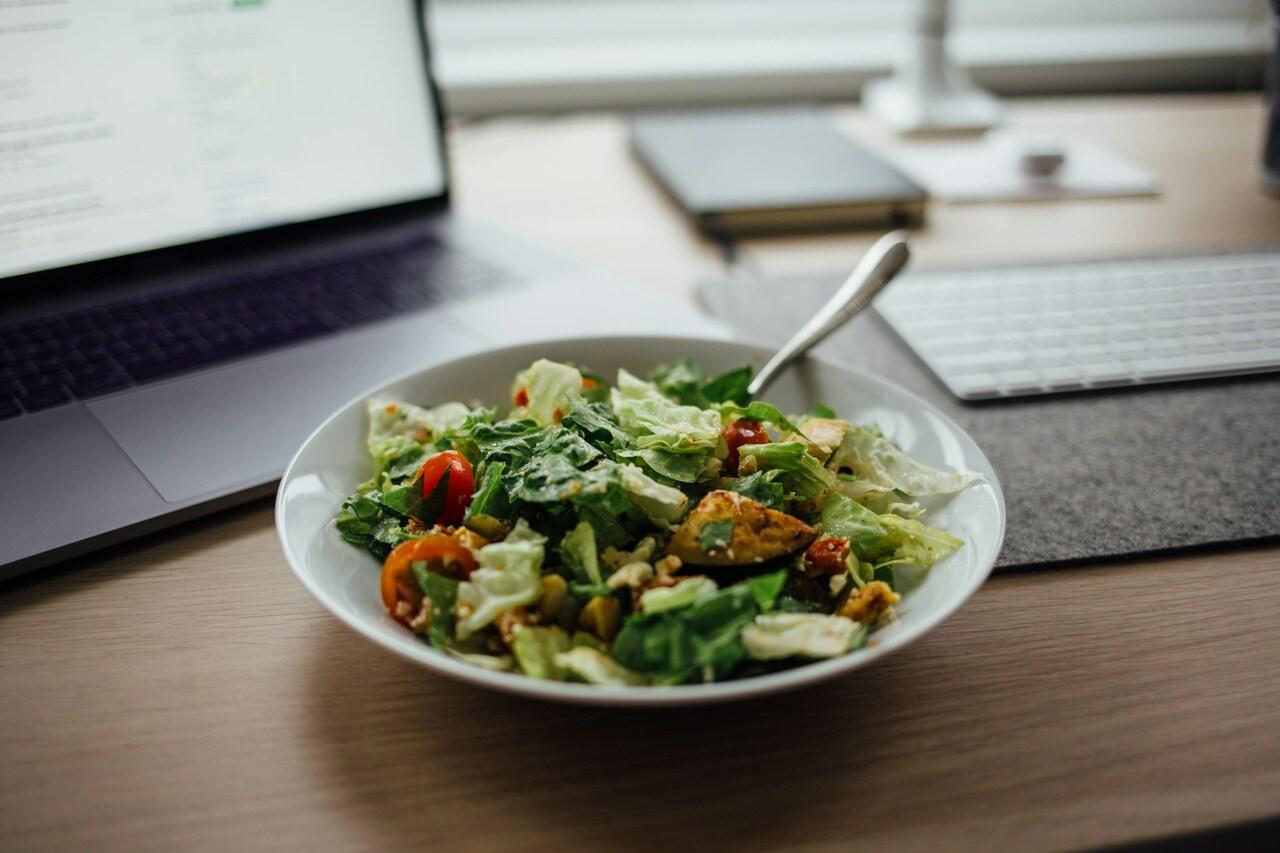
Even simple choices like a complete salad, a balanced bowl or a well‑built one‑pot dish can make a big difference compared to random snacks or heavily processed meals.
You don’t need to eat perfectly. You need to eat a bit more strategically.
Smart dinners when you’re tired
Evening is when many people have less mental energy for decisions. Having simple options already in mind can prevent impulsive choices.
Meals based on simple combos like vegetables, legumes, eggs, whole grains or other easy‑to‑prepare nutrient sources can be more than enough.
Preparing slightly larger portions when you have time can help you have ready meals on your busiest days.
Reducing complexity is often more important than increasing variety.
Smart snacks to avoid impulsive choices
Many unhelpful choices don’t happen from lack of knowledge, but from lack of available alternatives at the right moment.
Having simple snacks like fresh fruit, nuts, plain yogurt or similar options can help you avoid vending machines or ultra‑refined snacks when hunger hits.
You don’t need to eat often, but when you do it’s useful to have options that support your energy instead of sabotaging it.
Eating healthy when you’re short on time doesn’t mean eating perfectly. It means having enough practical strategies to make even the easiest choices better.
In the next section we’ll look at some simple organization strategies that can help you make this process even more automatic, without adding stress to your day.
Simple strategies to organize your nutrition during a busy week
When it comes to eating healthy, people often think about willpower. In reality, in most cases the difference comes from organization, even minimal.
You don’t need complex meal prep or to spend Sunday in the kitchen. A few smart strategies that cut friction between you and healthy choices are enough.
The goal isn’t to become perfectly organized, but to make healthy choices easier than random ones.
Cut the friction: make healthy food the easiest choice
One of the most powerful principles is this: we always tend to choose what's easiest when we have to decide.
If you only have highly processed snacks at home, you'll eat those. If you have simple, healthy options already available, it'll be much easier to choose better without overthinking.
Sometimes it’s enough:
keep fruit visible,
have 2–3 simple “emergency” meals,
buy basic foods that are easy to combine.
Small details that seem trivial but over time completely change habits.
Use the “minimum effective” rule
Many people fail because they try to do too much. But if you’re short on time you need the opposite: the minimal organization that yields the maximum result.
For example:
decide in advance 2–3 standard lunches for the week,
always have the same basic ingredients,
know what to order at places you frequent.
These micro‑decisions eliminate the daily stress of “what am I eating today?”
Create automatic habits
The most consistent people aren't the most motivated. They're the ones who have fewer decisions to make.
When some choices become automatic (same basic breakfasts, same smart snacks, same backup meals), nutrition stops being a problem you have to solve every day.
This is especially important for professionals and very busy people: less mental energy spent on food decisions means more energy for work and personal life.
Accept the imperfection of real weeks
There will always be chaotic weeks, trips, meals out, schedule changes. If your system only works in perfect weeks, it will eventually break.
If you have a flexible approach, you can always get back to good habits quickly without guilt or extremes.
True organization isn’t rigidity. It’s having a structure flexible enough to fit your real life.
When you start applying even just some of these strategies, eating healthy stops being something that requires constant effort and becomes something that happens almost automatically.
And that's the point: when your nutrition becomes easy to manage even in the busiest periods, energy, fitness and focus become a natural consequence.
In the next section we'll see how to start concretely, with practical steps you can apply already this week.
How to eat healthy even when you eat out or travel for work
Eating out or while on a business trip is often seen as the moment when all the progress you’ve built up is lost. In reality, with a few practical strategies, you can keep healthy habits without giving up taste or convenience.
The goal is to learn to choose better, without stress, without counting calories and without having to cook, even when you're away from your kitchen.
1. Know the available options in advance
Before a business lunch or a trip, take a few minutes to check the menu. Many restaurants and chains publish nutritional info online, but even just glancing at the dishes can help you spot balanced meals: more veggies, moderate protein and whole‑grain carbs.
Having the best options already in mind prevents impulsive decisions that often lead to less healthy choices.
2. Adopt the balanced plate rule
When you're out, applying the “balanced plate” logic is easier than ever: half the plate with vegetables or salad, a quarter with protein and a quarter with carbs. Even without knowing exact calories or macros, this simple layout guarantees nutritious meals and keeps you energized.
The key is more veggies, quality protein and complex carbs, without getting tangled up in numbers or grams.
3. Smart snacks on the go
Carry practical, nutritious snacks with you and you can avoid impulsive choices during short breaks or transfers. Nuts, fresh fruit, protein bars or yogurt can make the difference between a energy crash and a productive day.
It's not about not eating, but about anticipating risky situations and having ready‑made alternatives.
4. Flexibility without guilt
Eating out also means inevitable compromises: maybe the company dinner won’t always have perfect dishes. The winning strategy is to stay flexible, do the best you can and get back quickly to healthy habits without feeling guilty.
This mindset eliminates stress and helps you stay consistent even when external conditions aren't ideal.
5. Leverage restaurants to your advantage
Many restaurants offer simple dishes, like salads with protein, balanced bowls or nutrient‑rich soups. Ordering “light” doesn’t mean giving up flavor: you can customize the dishes, ask for less dressing, swap sides and still get a complete, energizing meal.
By following these strategies, eating healthy doesn’t have to stop just because you’re away from home or traveling. With a bit of planning, mindful choices and flexibility, you can keep stable energy, weight loss and peak focus without disrupting your work life.
How to start right away: a simple strategy for super‑busy professionals
First of all, the problem isn’t knowing what to eat or which habits to adopt, but finding a way to start without complications, especially when the day is packed with commitments.
The good news is you don’t need to overhaul everything at once. Even small, concrete steps repeated daily can lead to big results in energy, metabolism and mental performance.
1. Choose a single action to implement immediately
Instead of trying to follow all 8 principles of the Busy Metabolism Method™ at once, start with one easy habit you can fit into your routine.
For example:
- Drink a glass of water as soon as you wake up
- Do a quick 5‑minute movement in the morning
- Prepare a simple, balanced lunch the night before
Even this tiny choice, if kept consistent, creates a positive domino effect on the rest of your day.
2. Schedule strategic micro‑moments
Usually many busy professionals think, “I don’t have time to eat healthy or work out.” The solution is to find micro‑moments where you can act without reshaping the whole day.
Examples:
- Walk while on phone calls
- Take the stairs instead of the elevator
- Add extra veggies to the lunch you order out
You don’t need hours of prep: they’re minimal habits, but powerful.
3. Automate your choices
The more you make your food decisions automatic, the less mental effort you’ll need.
- Always have a backup meal ready in the fridge
- Keep healthy snacks within reach
- Stabilize breakfasts and main meals with simple formulas you already know
This lets you eat healthy without overthinking it, even when you’re under pressure.
4. Track small progress and celebrate wins
You don’t need to weigh yourself daily or count calories. Notice concrete signals: steadier energy, less nervous hunger, better focus.
Also, celebrating small daily wins helps you stay motivated and turn these micro‑habits into real long‑term results.
In short: you don’t need to flip your life upside down to start eating healthy. Begin with a small practical habit, weave it into your micro‑moments and automate your choices. This simple approach lets busy professionals boost energy, metabolism and mental performance without sacrificing precious time or giving up a full life.